
Calm · 2 min
A slow breath
The out-breath is the body's own signal that nothing needs fighting right now; three of them take under a minute.
You already know how to do this. You have done it at the end of a hard phone call, and in the car before you went in. The slow breath is not a technique you learn. It is one you remember.
The steps
Three small steps,in your own time.
Sit or stand where you are.
Breathe in through your nose for a count of about four, then out through your mouth or nose for about six.
Do this three times, then let your breathing go back to normal and notice what has changed, if anything.
Why the out-breath
When you breathe out slowly, your heart rate eases a little. That is ordinary physiology, not a trick: the long exhale is the body's own signal that nothing needs fighting right now. Breathing in quickly does the opposite. So the practice is simple. Make the out-breath longer than the in-breath, and let the rest of you follow.
You do not need to count to anything exact. In for about four, out for about six is a good shape. If six feels like a stretch, make it five. If you feel light-headed, breathe normally for a minute and start smaller. Slow is the point, not deep.
Where it fits
Three slow breaths take under a minute. That is short enough to fit in the places where a day is actually hard: the corridor outside a room, the kettle boiling, the pause after you have read a message and before you answer it. You do not need a quiet space, a mat or your eyes closed. You need the next breath, which is already coming.
Some people put a hand flat on their chest or their stomach, so there is something to feel move. Some do it looking out of a window. Some do it in the bathroom, because that is the only door that locks. All of these count.
What it is not
It will not fix the thing you are breathing about. The letter still arrives, the appointment is still on Thursday. What changes is the half-second between the thing and your reaction to it. That half-second is where you get to choose your next move instead of being carried into it.
If slowing your breath makes you feel more anxious, not less, that happens to some people, especially at first. Stop, and try again another day with your eyes open and a shorter out-breath. Or try the walk instead. The house has five practices because no single one fits everyone.
Making it a habit
Tie it to something you already do. Three breaths before you turn the key in the front door. Three before you open your phone in the morning. Three after you put the pan on. The hook does the remembering so you do not have to.
WE · TRIBE
Try itwith someone.
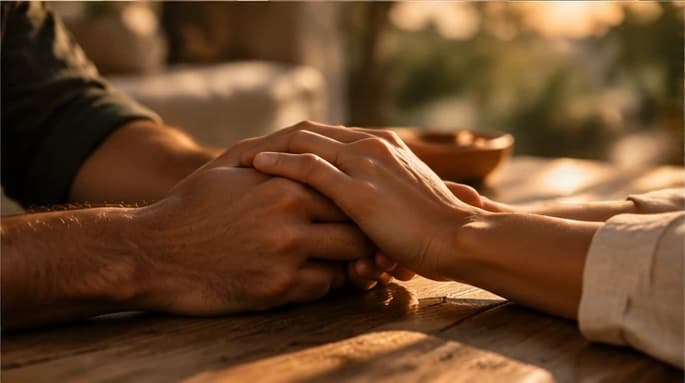
Tell one person you are trying this today, and ask if they would like to do it with you. Small things done side by side are easier to keep.
Try it today
Tonight, try: three breaths, out longer than in, before you turn out the light.
More like this
More from VIVE Calm,for real days.
Calm · 3 min
Breathing in a waiting room
Waiting rooms are where the slow breath earns its place: nowhere to go, nothing to do, and everything to think about.
Calm · 2 min
Rest
Twenty minutes lying down, awake, is not a failure to sleep; it is a practice of its own.
Calm · 3 min
The worry list
Worries written down at nine o'clock are much quieter at two.