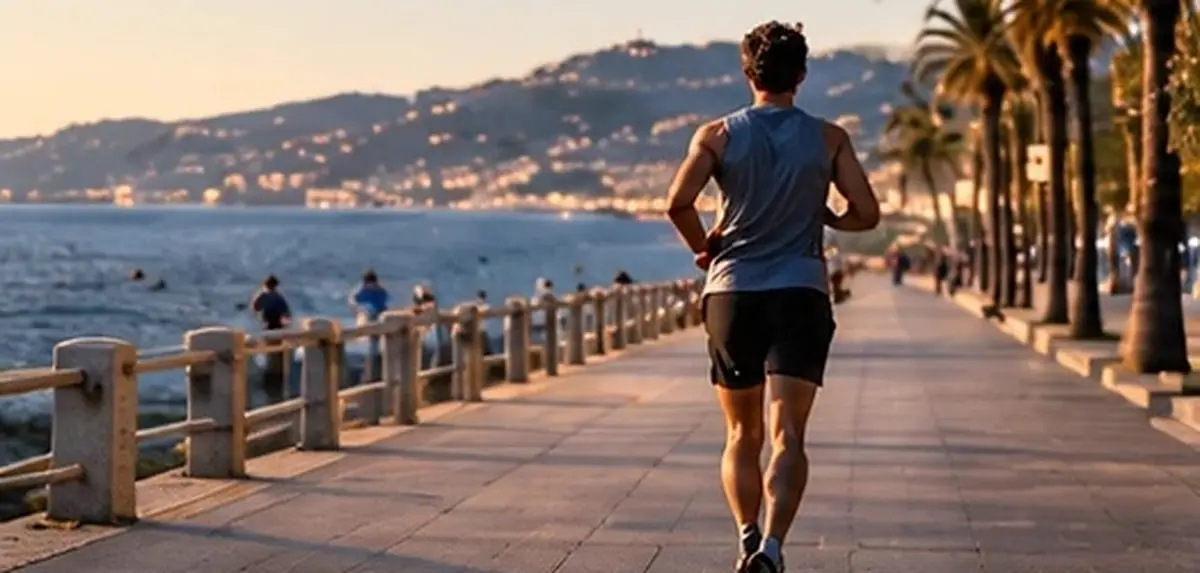
Move · 3 min
A walk
Twenty minutes outside, at your own pace, with no destination, is the most reliable reset most of us own.
Not a workout. Not steps to count. A walk: out of the door, around something, and back.
The steps
Three small steps,in your own time.
Put on shoes and go out of the door for ten minutes in one direction, then turn around.
No headphones, no destination.
Notice what your shoulders are doing when you get back.
Why twenty minutes
Twenty minutes is long enough for your body to change gear. Your breathing settles into the pace, your shoulders come down from around your ears, and the thing you went out thinking about has usually moved a little by the time you turn for home. Ten minutes helps. Twenty helps more. Beyond that you are welcome to keep going, but twenty is the practice.
Outside matters. Daylight, even on a grey day, is many times brighter than a lit room, and your body clock uses it to tell morning from evening. A morning walk tells it the day has started. An evening one, before dark, tells it the day is winding down. Both help with sleep, which is why the walk and the rest sit side by side in this house.
The same route
Pick one route and keep it. Around the block, to the corner and back, the loop of the park. A familiar route asks nothing of you. You do not have to decide anything or watch for turns, so your mind is free to drift, which is what you want it to do.
Go at the pace that is yours today. Some days that is brisk. Some days it is slow enough to notice which neighbour has repainted the door. Both count. The rule is not speed. It is that you went.
When there is no time
If you are looking after someone and cannot leave the house, the walk shrinks rather than disappears. Round the garden four times. Up and down the drive while the kettle boils. To the end of the road and back while someone else sits for ten minutes. If you cannot get outside at all, see the page on three minutes at the sink. It is not the same, and it is still something.
Company or not
Walking with someone is a different practice from walking alone, and both are good. Side by side is often the easiest way to have a hard conversation, because nobody has to hold eye contact and there are things to look at when the words run out. Alone, the walk is yours. Choose by what you need today, not by what you think you should want.
What to carry
Nothing much. A phone in a pocket, for safety, not for scrolling. Water if it is hot. The walk works best when your hands are empty.

WE · TRIBE
Try itwith someone.
Tell one person you are trying this today, and ask if they would like to do it with you. Small things done side by side are easier to keep.
Try it today
Today, try: twenty minutes out of the door, the same route as last time, at the pace you actually have.
More like this
More from VIVE Move,for real days.
Move · 3 min
Three minutes at the sink
Movement for the days when you cannot leave the house, the room, or the chair by the bed.
Move · 5 min
A two-minute desk check
Feet, back, screen and eyes: four quick checks that can make long hours at a desk easier on the body.
Move · 10 min
Looking after your feet in a standing job
Good shoes, small movements on shift and ten minutes with your feet up afterwards can ease long days on your feet.